

Evaporator
Changzhou Jiangyou Heating&Cooling Technology Co., Ltd.: Your Professional Evaporator Manufacturer!
We are located at No. 14 Fengrun Road, Luoyang Town, Wujin District, Changzhou City, Jiangsu Province, and are a comprehensive enterprise integrating technology research and development, production, sales, and service. Our company adheres to the principles of seeking truth, being pragmatic, innovating, and actively absorbing advanced technologies from domestic and foreign peers to continuously improve product quality and meet different customer needs. Our products have covered all provinces, municipalities, autonomous regions, and centrally-administered cities in China. With reliable product quality and excellent pre-sales and after-sales services, we have won the favor and trust of our customers.
Advanced Technology Equipment
Our company has introduced advanced technologies and equipment from both domestic and international sources, committed to producing high-quality refrigeration and air conditioning equipment. Through continuous innovation and technological upgrades, we can provide our customers with efficient, environmentally friendly, and durable products.
Diverse Product Lines
Specializing in the production of various high-demand cold storage plates, including arc angle cold storage plates, we offer products featuring environmental protection, corrosion resistance, and high flame retardancy. Additionally, we manufacture a wide range of cold storage doors such as double-open, single-open, electric or manual translational doors, chain doors, automatic return doors, free anti-collision insulation doors, modified atmosphere doors, and clean doors to meet diverse customer needs.
Professional Technical Services
Our business scope includes technical services, development, consultation, exchange, transfer, and promotion. With a professional technical team, we provide one-stop services from product design to installation and commissioning, ensuring every project achieves optimal results.
Comprehensive After-Sales Service
Beyond manufacturing and selling high-quality refrigeration and air conditioning equipment, we also offer installation and maintenance services. We commit to providing full support and assistance at every stage before, during, and after the sale, ensuring our customers face no worries throughout their usage period.
-
![Ceiling-mounted Evaporator]() Ceiling-mounted EvaporatorThe Vaporizer is a critical component in refrigeration systems, converting liquid refrigerant into a vapor, absorbing heat in the process. Our vaporizers are precision-engineered to ensure smooth...read more
Ceiling-mounted EvaporatorThe Vaporizer is a critical component in refrigeration systems, converting liquid refrigerant into a vapor, absorbing heat in the process. Our vaporizers are precision-engineered to ensure smooth...read more -
![Vaporizer]()


What is an Evaporator
Evaporators are heat exchangers that transfer heat from the process fluid into the refrigerant causing a phase change, and evaporation. In an evaporator, the refrigerant enters as a low-pressure liquid/vapor mixture and exits as a low-pressure gas. The change of state from liquid to gas occurs at a constant temperature and absorbs energy. A chiller’s evaporator achieves superheated refrigerant vapor. Superheat is when all the liquid refrigerant has evaporated, and the gas temperature increases above its saturation temperature. The process fluid enters as a hot liquid and exits at a lower temperature after transferring energy to the refrigerant.
Concentration Mechanism
Evaporators employ heat to concentrate solutions by selectively removing water, leaving behind a more potent substance. This mechanism is fundamental to their function in diverse industrial applications.
Versatility in Applications
A key feature of evaporator is their adaptability to a wide range of industries, including food processing, chemical manufacturing, and wastewater treatment. Their design allows for handling various liquids and solutions.
Water Recovery Capability
Evaporators contribute significantly to water conservation by efficiently recovering water from solutions. This is crucial for sustainable practices and reducing overall water consumption in industrial processes.
Energy-Efficient Design
Modern evaporators often incorporate energy-efficient features such as multiple-effect systems and thermal vapor recompression, minimizing energy consumption during operation.
Materials Compatibility
Evaporators are designed to handle different types of liquids, including corrosive or heat-sensitive solutions. This compatibility enhances their utility across diverse industrial settings.
Scalability
Evaporators are scalable to meet varying production needs. Whether in small-scale processes or large industrial operations, their design allows for customization to suit specific requirements.
Challenges and Considerations
Despite their advantages, evaporators face challenges such as scaling, initial capital investment, and heat sensitivity. Understanding these considerations is essential for optimizing their performance and addressing potential drawbacks. You can easily find the evaporator supplier.
Types of Evaporators
Falling Film Evaporator
Falling Film Evaporator inverts to optimize heat exchange, placing the exchanger at the top for efficient operation. The evaporator receives the feed at its top and subsequently distributes it further to the tubes. It consists of a vertical shell and a tube heat exchanger. The solvent introduced atop the tube flows downward, forming a thin film on the surface tube. As it gets heated further, the vapors get generated. It increases the heat transfer for the process. Falling film evaporators are low cost and have high heat transfer efficiency, but disadvantages include high headroom, unsuitability for certain materials, and the need for recirculation.
Forced Circulation Evaporators
A forced Circulation Evaporator is a type of evaporator that requires the addition of a pump and additional controls. It is mostly used in cases where the feed contains solids or crystallization is present. And also used to separate mixtures that are not possible by normal evaporating units. A forced circular evaporator boosts liquid flow to 2-6m/s using a circulation pump, serving dual roles in heat exchange and flash separation. Therefore, it separates the mixture without using normal conventional boiling. So, it consists of a vertical shell and a heat exchanger tube with a centrifugal pump. Forced Circulation Evaporators offer high efficiency and reduced fouling but entail drawbacks like higher costs, increased power usage, and time-intensive processes.
LTV Evaporators
Long tube vertical (LTV) refers to a type of evaporator, also recognized as a rising film evaporator. Hence, LTV Evaporators are one of the most used evaporators. A liquid separator is attached to a shell and tube heat exchanger. The rising film evaporator is very similar to the falling film evaporator. It’s just the opposite of a falling film. It also consists of a vertical shell and a tube heat exchanger for heat exchange. The solvent is fed at the bottom of the tube. As the heat increases further, it generates vapors that lift the liquid upward. Moreover, the process is completed as a result. The advantages of LTV Evaporator are less floor space requirements, high heat transfer efficiency, and the ability to handle foamy liquids. The common disadvantages of LTV Evaporators are they require high headroom, and higher pressure required.
Plate Evaporators
In the process of evaporation, a Plate Evaporator facilitates the flow of a thin liquid film between its plates. Also referred to as gasket plate and frame evaporator, Plate Evaporator types are constructed by arranging multiple plates with corner openings between a top and bottom bar. Therefore, the Plate Evaporator, a type of plate and frame heat exchanger, finds extensive use in the food and beverage industry. Plate Evaporators offer several advantages, including adaptability to various materials, low required headroom, ease of cleaning, and modification. However, a significant drawback of Plate Evaporator is the presence of a large gasket area, which may lead to potential leakage if the gasket is not appropriately selected.
Mechanical Vapor Recompression (MVR)
Mechanical Vapor Recompression (MVR) compresses water vapor, causing an increase in temperature and pressure in this type of evaporator. The rise in temperature makes the temperature difference between the vapor and the fluid. The further heat transfer results in the heat exchanger. Hence, the compressed vapor is again fed back to generate more steam. This is an energy-efficient and energy-recovery process.
Selecting Evaporators for Process Applications


Heat sensitivity
Many foods, pharmaceuticals, chemicals and resins are heat- or temperature-sensitive and require either low heating temperatures or a short residence time exposed to the heat, or both. This can be accomplished by a combination of minimizing the volume of product in the evaporator at any one time, minimizing the time in the evaporator, and reducing the product’s bulk boiling temperature by operating the evaporator at reduced pressures. Reducing the internal operating pressure may also allow operation at lower heating temperatures while still maintaining a reasonable heat-transfer driving force (the temperature difference between the boiling point of the bulk product and the temperature of the heating medium).
Fouling
Fouling of the heat transfer surfaces is usually caused by solids in the feed, precipitating solids in the concentrate, or degradation of the product. A slow buildup of a film on the heat transfer surfaces will cause a gradual reduction in the overall heat-transfer coefficient. Eventually, this will require shutdown of the process and cleaning of the heat transfer surfaces, which results in production downtime and additional maintenance labor.
Foaming
Product foaming during vaporization is common. It may range from a small amount of unstable foam that breaks easily to a very stable foam that is difficult to break and tends to fill the entire void of the evaporator system. Foaming can often be minimized by special designs for the feed inlet (separation of feed from the vapor stream) and the vapor/liquid separation area(special disengaging designs). Also, reducing the boiling intensity of the liquid on the heat transfer surface (by operating at a lower temperature or at higher pressure) and reducing the vapor velocity in the tubes may significantly reduce foaming. Where the product purity specifications allow, the introduction of an antifoam may solve or greatly reduce the problem.
Solids
The properties of the concentrate may change as the solids concentration increases. Solids may plug tubes, causing loss of heat transfer surface, in turn resulting in reduced heat-transfer rates and requiring downtime for cleaning. Solids increase the tendency to foul the heating surface, which reduces the heat-transfer coefficient and boil-up rate. An increase in solids may also increase the concentrate viscosity, which affects the overall heat-transfer coefficient, reducing capacity.
Viscosity
Any increase in the viscosity of the concentrate will reduce the overall heat-transfer coefficient.
Distillate-to-concentrate ratio
In general, there must be enough liquid passing through the evaporator to keep the heat-ed walls wet. Lack of wall wetting and fluid velocity may cause serious fouling and salting of solids on the heat transfer surfaces, causing reduced heat transfer and possible product quality degradation as a result of hot spots on the heating surface. In processes where high distillate-to-concentrate ratios are required, recycling of some amount of the concentrate may be required.
Distillate vapor velocity (pressure drop and entrainment)
Consideration must be given to the vapor velocity in the evaporator tubes and heating jackets. Adequate velocities are needed to produce sufficient heat-transfer coefficients without exceeding limitations on pressure drop, erosion and entrainment. Careful attention must be paid to the requirements of the vapor/liquid separator for separation efficiency and pressure drop.
Heat transfer medium
The heat transfer medium (hot oil or steam) may impact the selection of the type of evaporator. Liquid-heated evaporators typically have lower overall heat-transfer coefficients and require more heat transfer area. If the product is temperature-stable, then hot oil heating may allow higher temperatures and overcome the lower heat-transfer coefficient. This, in some cases, could allow the use of a smaller evaporator.
Required materials of construction (reactivity)
A major consideration in evaporator selection may be the required materials for construction. The heat-transfer surface material is extremely important, because it not only affects the overall material cost but also determines the thermal conductivity of the material, which impacts the overall heat-transfer coefficient and the required surface area.
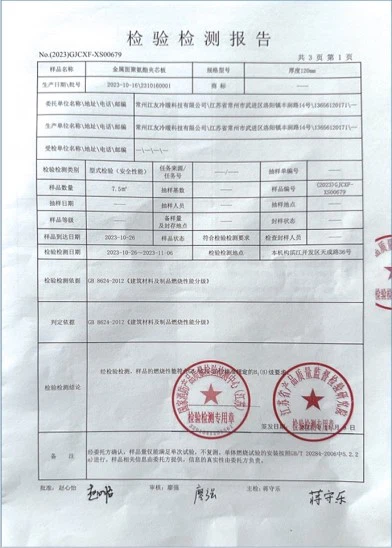
Certificate



Frequently Asked Questions
We're professional evaporator manufacturers and suppliers in China, specialized in providing high quality customized service. We warmly welcome you to buy discount evaporator made in China here from our factory.
power plant evaporator, evaporator for pharmaceutical quality, concentrator evaporator