

Cold Storage Panels
Changzhou Jiangyou Heating&Cooling Technology Co., Ltd.: Your Professional Cold Storage Panels Manufacturer!
We are located at No. 14 Fengrun Road, Luoyang Town, Wujin District, Changzhou City, Jiangsu Province, and are a comprehensive enterprise integrating technology research and development, production, sales, and service. Our company adheres to the principles of seeking truth, being pragmatic, innovating, and actively absorbing advanced technologies from domestic and foreign peers to continuously improve product quality and meet different customer needs. Our products have covered all provinces, municipalities, autonomous regions, and centrally-administered cities in China. With reliable product quality and excellent pre-sales and after-sales services, we have won the favor and trust of our customers.
Advanced Technology Equipment
Our company has introduced advanced technologies and equipment from both domestic and international sources, committed to producing high-quality refrigeration and air conditioning equipment. Through continuous innovation and technological upgrades, we can provide our customers with efficient, environmentally friendly, and durable products.
Diverse Product Lines
Specializing in the production of various high-demand cold storage plates, including arc angle cold storage plates, we offer products featuring environmental protection, corrosion resistance, and high flame retardancy. Additionally, we manufacture a wide range of cold storage doors such as double-open, single-open, electric or manual translational doors, chain doors, automatic return doors, free anti-collision insulation doors, modified atmosphere doors, and clean doors to meet diverse customer needs.
Professional Technical Services
Our business scope includes technical services, development, consultation, exchange, transfer, and promotion. With a professional technical team, we provide one-stop services from product design to installation and commissioning, ensuring every project achieves optimal results.
Comprehensive After-Sales Service
Beyond manufacturing and selling high-quality refrigeration and air conditioning equipment, we also offer installation and maintenance services. We commit to providing full support and assistance at every stage before, during, and after the sale, ensuring our customers face no worries throughout their usage period.
-
![100mm Cold Storage Insulation Board]() 100mm Cold Storage Insulation BoardDesigned for optimal energy efficiency in cold storage facilities, our 100mm insulation board features a dense, high-performance foam core that effectively resists heat transfer.read more
100mm Cold Storage Insulation BoardDesigned for optimal energy efficiency in cold storage facilities, our 100mm insulation board features a dense, high-performance foam core that effectively resists heat transfer.read more -
![150mm Cold Storage Insulation Board]() 150mm Cold Storage Insulation BoardFor larger-scale cold storage applications requiring superior insulation performance, our 150mm insulation board is the ideal solution.read more
150mm Cold Storage Insulation BoardFor larger-scale cold storage applications requiring superior insulation performance, our 150mm insulation board is the ideal solution.read more -
![200mm Cold Storage Insulation Board]() 200mm Cold Storage Insulation BoardWhen maximum insulation is paramount, our 200mm cold storage insulation board is the ultimate choice. Boasting an impressive thickness of high-density polyurethane foam, it creates an impenetrable...read more
200mm Cold Storage Insulation BoardWhen maximum insulation is paramount, our 200mm cold storage insulation board is the ultimate choice. Boasting an impressive thickness of high-density polyurethane foam, it creates an impenetrable...read more -
![304 Stainless Steel Cold Storage Insulation Board]() 304 Stainless Steel Cold Storage Insulation BoardCombining the corrosion resistance of 304 stainless steel with advanced insulation technology, our cold storage insulation board is tailored for demanding hygiene and sanitation requirements.read more
304 Stainless Steel Cold Storage Insulation BoardCombining the corrosion resistance of 304 stainless steel with advanced insulation technology, our cold storage insulation board is tailored for demanding hygiene and sanitation requirements.read more -
![PU Cold Storage Hook Plate]() PU Cold Storage Hook PlateInnovatively designed for versatile storage needs in cold environments, our PU cold storage hook plate integrates both insulation and organizational functionality. Crafted from high-quality...read more
PU Cold Storage Hook PlateInnovatively designed for versatile storage needs in cold environments, our PU cold storage hook plate integrates both insulation and organizational functionality. Crafted from high-quality...read more -
![Polyurethane Light Sheet]() Polyurethane Light SheetDesigned for energy-efficient lighting solutions in cold storage facilities, our Polyurethane Light Sheet combines advanced illumination technology with exceptional insulation properties. The...read more
Polyurethane Light SheetDesigned for energy-efficient lighting solutions in cold storage facilities, our Polyurethane Light Sheet combines advanced illumination technology with exceptional insulation properties. The...read more -
![Embossed Aluminum Cold Storage Panels]() Embossed Aluminum Cold Storage PanelsCrafted for enhanced durability and aesthetic appeal, our embossed aluminum cold storage panels offer a unique combination of functionality and style.read more
Embossed Aluminum Cold Storage PanelsCrafted for enhanced durability and aesthetic appeal, our embossed aluminum cold storage panels offer a unique combination of functionality and style.read more


What is a Cold Storage Panel
Cold storage panels are insulated panels made from two main components: a core and two structural boards. This shielding layer of the inflexible core is often made from either PIR or PU. On the other hand, the two structural boards responsible for housing the core are often made from either pre-painted galvanised steel (PPGI) or Stainless Steel. These insulated panels are core building materials used for making cold rooms. These panels help hold the internal temperature of the cold room constant. They are also used in combination with foam insulation to help prevent any cold air leakage and ensure the structural integrity of the cold room envelope. Application-wise, they can be installed on floors, walls, and even the roof. However, they require reinforcing and supporting building material to ensure their viability. Without cold room or insulation panelling, upholding a constant desired temperature within the cold room can be difficult. Due to the increased advantages of using these insulated panels, many businesses tend to use them in a general capacity for thermal insulation as well.
Different Types of Cold Storage Panels
Expanded Polystyrene Insulated Panels
Expanded Polystyrene Insulated Panels utilize a high-grade, lightweight foam called Expanded Polystyrene. Made from closed-cell insulation technology, this form of foam is rigid and available in various levels of strengths to match the intended load and back-fill force of the cold room. The best feature of closed-cell insulation technology is its ability to withstand maximum water absorption and ensure a strong barrier against vapor permanence.
Neopor Insulated Panels
Neopor Insulated Panels utilize a very specialized form of rigid foam known as Neopor Graphite Polystyrene (GPS). this highly efficient foam is known to be approximately 20% more energy-efficient in comparison to conventional expanded polystyrene (EPS) insulation. These panels can be installed behind new siding or below the freezer slabs. Additionally, they are most effective when installed during initial construction or intensive remodeling projects.
Compressed Straw Core Insulated Panels
Polyurethane (PU) Insulated Panels are one of the most commonly used insulation solutions in cold rooms, chillers, and freezers. Their high thermal resistance makes them a great preliminary insulation solution especially for cold room projects that need to be assembled quickly. These panels are installed using the tongue-and-groove system as it is simple and most effective for this type of panelling.
Polyurethane Insulated Panels
If you are looking for a more environmentally friendly insulation system, then the Compressed Straw Core Insulated Panels are a great investment to consider. This form of panelling is made from renewable, sustainable, and recyclable material such as agricultural straw thus making it cost-effective as well. Despite being environmentally friendly and cost-effective, these panels have less insulation to offer because of their considerably thick and heavier nature compared to other panels available.
PolyIsocyanurate Insulated Panels
Polyisocyanurate (PIR) Insulated panels are highly effective, have extremely low thermal conductivity, light weight and have high strength to weight ratio. Therefore, it is the natural choice of product usage for insulation application for construction projects. Similarly, Polyisocyanurate (PIR) have exceptional fire performance as compared to other materials above. When incorporated into building products, it can be stipulated as being able to meet some of the most demanding fire performance requirements in the industry.
How to Clean Cold Storage Panels


Safety Precautions
Before you begin cleaning cold room panels, it’s important to prioritize safety. Here are some essential safety precautions to keep in mind. Before starting the cleaning process, ensure that the cold room is powered off. This minimizes the risk of electrical accidents while you’re working on the panels. Wear appropriate Personal Protective Equipment (PPE), including gloves, safety goggles, and protective clothing. Cold room panels may have sharp edges, and cleaning agents could potentially be harmful to skin and eyes. If you’re using cleaning agents, make sure the cold room is well-ventilated. This prevents the accumulation of fumes and ensures a safe working environment.
Cleaning Supplies You’ll Need
Gather the necessary cleaning supplies before you begin the cleaning process. Here’s what you’ll need. Choose a mild detergent that is safe for the panel surfaces and won’t leave behind residue. Use soft brushes or cloths to avoid scratching the panel surfaces while removing dirt and grime. Fill a bucket with water for rinsing the panels after cleaning. A vacuum cleaner with a brush attachment can help remove loose dust and debris from panel crevices.
Initial Dusting
Begin by using a vacuum cleaner with a brush attachment to gently remove loose dust and debris from the panel surfaces. Pay attention to crevices and corners where dirt tends to accumulate.
Prepare Cleaning Solution
Mix a mild detergent with water in a bucket according to the manufacturer’s instructions. Avoid using abrasive cleaners that could damage the panel finish.
Cleaning
Dip a soft cloth or brush into the cleaning solution and gently scrub the panel surfaces. Work in small sections, applying light pressure to avoid scratching the panels. Focus on areas with visible stains or grime.
Rinsing
After scrubbing, use a clean cloth dampened with water to wipe down the panels and remove any detergent residue. For cleaning insulated cold room walls see here.
Drying
Allow the panels to air dry. Use a dry, clean cloth to speed up the drying process and prevent water spots.
Final Inspection
Once the panels are dry, perform a final inspection to ensure that all dirt and stains have been effectively removed. If necessary, repeat the cleaning process for stubborn stains.
Advantages of Cold Storage Panels
Energy Efficiency
One of the most significant benefits of cold room panels is their energy efficiency. They are designed to provide a high level of insulation, which helps to reduce energy consumption. By maintaining a consistent temperature, cold room panels help to reduce the load on cooling systems and prevent energy wastage.
Durability and Longevity
Cold room panels are built to last. They are made from high-quality materials such as polyurethane foam, which is known for 13 durability and strength. They are also designed to withstand harsh environmental conditions, making them ideal for use in extreme temperatures.
Customizable
Cold room panels are highly customizable, which makes them ideal for various applications, They come in different sizes. shapes. and thicknesses. and can be customised to fit specific requirements. This makes them suitable for cold. Storage warehouse and a wide range of industries, including food processing. pharmaceuticals, and agriculture.
Easy Installation
Cold room panels are easy to install, which helps to reduce installation time and costs. They are designed to fit together easily and can be assembled by a team of experts within a short time. This means that businesses can get their cold rooms up and running quickly, minimizing downtime and maximizing productivity .
Hygienic
Cold room panels are hygienic and easy to clean, making them ideal for use in the food processing industry, They are made from materials that are resistant to bacteria, mold, and mildew, which helps to maintain a clean and safe environment for food processing.
Cost-effective
Cold room panels are cost-effective compared to traditional building materials. They require minimal maintenance and have a Longer Lifespan which reduces the need for frequent repairs or replacements, They also help to reduce energy costs, making them an affordable option for businesses that need to maintain a controlled environment.
5 Tips for Cleaning Cold Storage Panels
Rinse the surface thoroughly with clean water
Cold rooms are ideal storage for food and beverages. These rooms need to be kept clean to avoid any dirt and contamination with bacteria for hygienic purposes. Regularly washing the panels with water will prevent that. Always clean the sandwich panel surfaces from top to bottom with clean water or a solution of non-aggressive detergent and warm water.
Avoid concentrated and harsh cleaners
Concentrated cleaners, abrasive solutions and solvents will cause damage to the surface of the sandwich panel. Use a less aggressive cleaner. Do not exceed the suggested quantity and dilute the cleaner. Generally, the recommended pH of the cleaner should be between 4 and 9. White spirit can be used for oil or grease stains, followed by a water rinse.
Use caution with high-pressure cleaning
Water hoses and high-pressure cleaning should be done carefully and not too closely or perpendicular to the panel surface. Steam cleaning can cause damage at temperatures exceeding 70oC. Generally, keep the hose at a 30cm distance from the surface, use a pressure of maximum 50 bars, and maintain the temperature between 30℃ and 50℃.
Keep water out of panel joints
At the panel joints, the high-pressure cleaner should be pointed downwards tO OVoid pushing waternto the oints and cause damage. Be careful in the washing process to avoid having any water gathering in the joints. Use non aibrasive dleaners to remove traces of dirt.
Follow through witha clean rinse
Always follow panel washing with a thoroughly clean watenrinse, especialy when using adleaning sOIution. Do not leave the washing solution in contact with the metal sandwich panel surface formore than inutes to preventxidation.
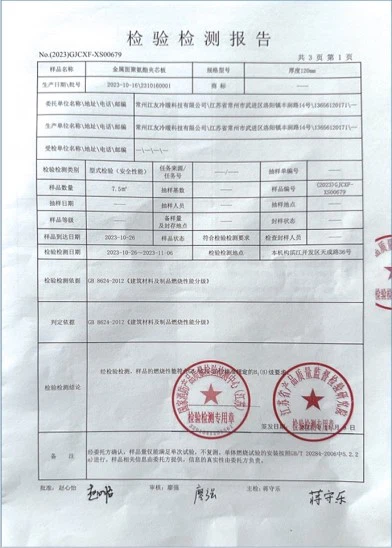
Certificate



Frequently Asked Questions
We're professional cold storage panels manufacturers and suppliers in China, specialized in providing high quality customized service. We warmly welcome you to buy discount cold storage panels made in China here from our factory.