


Changzhou Jiangyou Heating&Cooling Technology Co., Ltd.: Your Professional Logistics Cold Storage Manufacturer!
We are located at No. 14 Fengrun Road, Luoyang Town, Wujin District, Changzhou City, Jiangsu Province, and are a comprehensive enterprise integrating technology research and development, production, sales, and service. Our company adheres to the principles of seeking truth, being pragmatic, innovating, and actively absorbing advanced technologies from domestic and foreign peers to continuously improve product quality and meet different customer needs. Our products have covered all provinces, municipalities, autonomous regions, and centrally-administered cities in China. With reliable product quality and excellent pre-sales and after-sales services, we have won the favor and trust of our customers.
Advanced Technology Equipment
Our company has introduced advanced technologies and equipment from both domestic and international sources, committed to producing high-quality refrigeration and air conditioning equipment. Through continuous innovation and technological upgrades, we can provide our customers with efficient, environmentally friendly, and durable products.
Diverse Product Lines
Specializing in the production of various high-demand cold storage plates, including arc angle cold storage plates, we offer products featuring environmental protection, corrosion resistance, and high flame retardancy. Additionally, we manufacture a wide range of cold storage doors such as double-open, single-open, electric or manual translational doors, chain doors, automatic return doors, free anti-collision insulation doors, modified atmosphere doors, and clean doors to meet diverse customer needs.
Professional Technical Services
Our business scope includes technical services, development, consultation, exchange, transfer, and promotion. With a professional technical team, we provide one-stop services from product design to installation and commissioning, ensuring every project achieves optimal results.
Comprehensive After-Sales Service
Beyond manufacturing and selling high-quality refrigeration and air conditioning equipment, we also offer installation and maintenance services. We commit to providing full support and assistance at every stage before, during, and after the sale, ensuring our customers face no worries throughout their usage period.
Related Product Introduction

Refrigerated containers, with standardized sizes and professional designs, offer stable quality and function for transporting cold goods. Converted from reefer containers, these mobile cold storages avoid long-term construction at the destination, benefiting the environment and reducing costs. They are designed to store frozen and refrigerated items separately in different temperature zones. Single chillers require dividing the space into units to meet various temperature needs. Refrigerated containers can be tailored in width (10~53ft) and, if transport conditions allow, in height and width to match specific user requirements. Adequate refrigerant ensures rapid freezing of stored items.

The medical cold storage mainly stores various kinds of medical products that cannot be preserved under normal temperature conditions. Under the low temperature cold storage conditions, the medicines are not deteriorated, and the shelf life of the medicines can be prolonged. It is widely used to store various medicines, vaccines, blood, medicines, reagents and biological products.

Logistics cold storage refers to the specialized storage and transport of temperature-sensitive goods, such as food, medications, and chemicals. It relies on various equipment, technologies, and procedures to maintain the item's required temperature. By regulating the storage environment, companies within the supply chain network ensure that products maintain quality, safety, and integrity until they reach their destination.

Quick freezing cold storage (Blast freezer)is a method which food quickly passes through the largest ice crystal formation area and quickly freezes when the average temperature reaches - 18 ℃. In the process of food freezing, various changes will take place, such as physical changes, cell and tissue changes, biological and microbial changes, etc. Generally, the temperature of quick-frozen cold storage is - 15 ℃ ~ - 35 ℃. The quick-frozen cold storage is mainly used for the low-temperature freezing of food, medicine, chemical raw materials and other articles.

Fresh-keeping Refrigerated Cold Storage
Cold storage is the process of storing perishable food items at a low temperature to maintain food safety and improve food preservation. Fresh-keeping Refrigerated Cold Storage" refers to a specialized type of cold storage facility designed specifically for preserving the freshness and quality of perishable goods such as fruits, vegetables, meats, and other food items. These facilities are equipped with advanced refrigeration systems that maintain optimal temperatures and humidity levels to slow down the deterioration process and extend the shelf life of stored products.

Industrial And Commercial Cold Storage
Industrial and Commercial Cold Storage" refers to large-scale refrigerated facilities used by businesses and industries for storing perishable goods such as food, pharmaceuticals, and other temperature-sensitive products. These cold storage facilities are designed to maintain optimal temperatures and humidity levels to ensure the preservation of the stored items' quality and safety over an extended period. Commercial systems often focus on maintaining consistent temperatures within a specified range suitable for storing perishable goods. While industrial refrigeration requires specialized cooling techniques and sophisticated monitoring systems. In the end, the temperature requirements are more stringent.

Transforming existing spaces into efficient cold storage facilities, our retrofit cold storage solutions offer cost-effective alternatives to new construction.

Designed for long-term storage of frozen foods and other perishable goods, our freezers offer superior temperature control and energy efficiency.
What is a Logistics Cold Storage
Logistics cold storage refers to the specialized storage and transport of temperature-sensitive goods, such as food, medications, and chemicals. It relies on various equipment, technologies, and procedures to maintain the item's required temperature. By regulating the storage environment, companies within the supply chain network ensure that products maintain quality, safety, and integrity until they reach their destination.
Advantages of Logistics Cold Storages
Reduced Product Loss
One of the primary advantages of cold chain logistics is reducing product loss. By maintaining the right temperatures throughout the supply chain, perishable goods are less likely to spoil or degrade. Reducing product waste significantly lowers companies' costs.
Extended Shelf Life
Another important benefit is the extended shelf life of products. Storing and transporting items like food, pharmaceuticals, and chemicals at the correct temperatures increases their longevity. It allows products to stay on shelves for longer periods, giving consumers access to fresh and effective goods.
Enhanced Public Safety
Cold chain logistics also enhances public safety. Proper temperature control prevents the growth of harmful bacteria and other pathogens in food and medical supplies, reducing the risk of foodborne illnesses and ensuring that medicines and vaccines remain effective.
Compliance with Regulations
Compliance with regulations is another critical benefit. Many industries, such as food and pharmaceuticals, are subject to strict temperature control regulations. An effective cold chain helps companies meet these regulatory requirements, avoiding legal issues and potential fines. It also builds trust with customers and partners, who can confidently see that we handle and deliver products safely and correctly.
Improved Quality Control
Effective cold chain logistics improve quality control by maintaining consistent temperatures throughout the supply chain. It makes sure that products arrive in optimal condition, preserving their quality, taste, and effectiveness. Consistent temperature control reduces the chances of variation in product quality, which can be especially important for high-value goods such as speciality foods and biologics.
Components of Logistics Cold Storages
Packaging
Utilizes materials and technologies such as quilts, reefers, dry ice, gel packs, liquid nitrogen, and eutectic plates to maintain temperature integrity.
Monitoring
Ensures continuous tracking of environmental conditions throughout the supply chain.
Transportation
Involves the use of specialized refrigerated trucks, railcars, cargo ships, and aircraft.
Customs Clearance
Addresses the regulatory requirements for international transport of perishable goods.
Storage
Cold storage facilities equipped with optimal climate control for perishable goods.
Customer Education
Informs end-users about proper handling and storage to maintain product quality.
Key cold chain technologies that provide a temperature-controlled environment during transportation
Dry ice
Solid carbon dioxide is about -80°C and is capable of keeping a shipment frozen for an extended period of time. It is particularly used for the shipping of pharmaceuticals, dangerous goods, and foodstuffs and in refrigerated unit load devices for air cargo. Dry ice does not melt. Instead, it sublimates when it comes in contact with air.
Gel packs. Large shares of pharmaceutical and medicinal shipments are classified as chilled products, which means they must be stored in a temperature range between 2 and 8°C. The standard method to provide this temperature is to use gel packs or packages that contain phase changing substances that can go from solid to liquid and vice versa to control an environment. Depending on the shipping requirements, these packs can either start off in a frozen or refrigerated state. Along the transit process, they melt to liquids, while at the same time capturing escaping energy and maintaining an internal temperature.
Eutectic plates
They are also known as "cold plates". The principle is similar to gel packs. Instead, plates are filled with a liquid and can be reused many times. Eutectic plates have a wide range of applications, such as maintaining cold temperatures for rolling refrigerated units. They can also be used in delivery vehicles to keep the temperature constant for short periods of time, a process that can be suitable for deliveries in noise-sensitive areas or for night deliveries.
Liquid nitrogen
An especially cold substance, of about -196°C, used to keep packages frozen over a long period of time and mainly used to transport biological cargo such as tissues and organs. It is considered as a hazardous substance for the purpose of transportation.
Quilts. Insulated pieces that are placed over or around freight to act as a buffer in temperature variations and to maintain the temperature relatively constant. Thus, frozen freight will remain frozen for a longer time period, often long enough not to justify the usage of more expensive refrigeration devices. Quilts can also be used to keep temperature-sensitive freight at room temperature, while outside conditions can substantially vary (e.g. during the summer or the winter).
Reefers
The generic name for a temperature-controlled transport unit can be a van, small truck, semi-trailer, or standard ISO container. These units, which are insulated, are specially designed to allow temperature-controlled air circulation maintained by an attached and independent refrigeration plant. A reefer is, therefore, able to keep the cargo temperature cool and even warm. The term reefer increasingly applies to refrigerated forty-foot ISO containers, with the dominant size being 40 high-cube footers (45R1 being the size and type code).
Products That Require A Logistics Cold Storage
Artwork
Temperature control is important for artwork to avoid fading or damage to the paint, especially if it's an older piece.
Plants
Cut plants are more likely to last and remain vibrant in a cooler environment.
Candles
Wax is prone to melting when exposed to hotter temperatures. Cool storage allows candles to keep their shape, color, and quality.
Film
Old-fashioned film canisters that are sensitive to temperature. To avoid damaging the film and preserve the tape, it should be stored in a cold environment.
Cologne
Cologne will retain its scent longer if stored in a cold environment (though perfume should be stored at room temperature).
Cosmetics
Most cosmetic products will last longer if they're stored in the cold, especially products such as lipstick.
Seeds
Most types of seeds, if kept in a moisture-proof container, will have a longer lifespan if they're kept in cold storage.
How Do You Reduce Waste and Spoilage in Cold Chain Logistics
Monitor and control temperature
One of the most important factors in cold chain logistics is maintaining the optimal temperature range for each product throughout the journey. Temperature fluctuations can cause spoilage, contamination, or degradation of the goods, resulting in wasted resources and customer dissatisfaction. To prevent this, you need to monitor and control the temperature of your cold chain facilities, vehicles, and containers, using sensors, data loggers, and smart devices. You also need to train your staff on how to handle and store the goods properly, and follow the best practices for loading and unloading.
Choose the right packaging and insulation
Another way to reduce waste and spoilage in cold chain logistics is to choose the right packaging and insulation materials for your products. Packaging and insulation can protect the goods from external factors, such as humidity, light, and shock, and also help maintain the desired temperature level. However, not all packaging and insulation materials are suitable for cold chain logistics, as some may be too bulky, expensive, or unsustainable. You need to consider the characteristics, requirements, and shelf life of your products, and select the packaging and insulation materials that are durable, cost-effective, and eco-friendly.
Optimize your routes and schedules
A third tip to reduce waste and spoilage in cold chain logistics is to optimize your routes and schedules. The longer the goods stay in transit, the higher the risk of exposure to adverse conditions, delays, or accidents. Therefore, you need to plan your routes and schedules carefully, taking into account the distance, traffic, weather, and customer demand. You also need to coordinate with your suppliers, carriers, and customers, and communicate any changes or issues promptly. By optimizing your routes and schedules, you can reduce the transit time, fuel consumption, and carbon footprint of your cold chain logistics.
Implement inventory management and traceability systems
A fourth tip to reduce waste and spoilage in cold chain logistics is to implement inventory management and traceability systems. Inventory management and traceability systems can help you track and manage the quantity, location, and condition of your cold chain goods, from the source to the destination. They can also help you identify and resolve any problems, such as shortages, excesses, or damages, and improve your decision making and forecasting. You can use various technologies, such as barcodes, RFID, GPS, or blockchain, to implement inventory management and traceability systems for your cold chain logistics.
Adopt circular economy principles
A fifth tip to reduce waste and spoilage in cold chain logistics is to adopt circular economy principles. Circular economy principles aim to reduce the consumption of resources and the generation of waste, by designing, producing, and using products that are reusable, recyclable, or biodegradable. By adopting circular economy principles, you can not only reduce the environmental impact of your cold chain logistics, but also create new value and opportunities for your business. For example, you can use renewable energy sources, such as solar or wind, to power your cold chain facilities and vehicles. You can also use waste or by-products from your cold chain goods, such as food or organic matter, to create new products, such as compost or biogas.
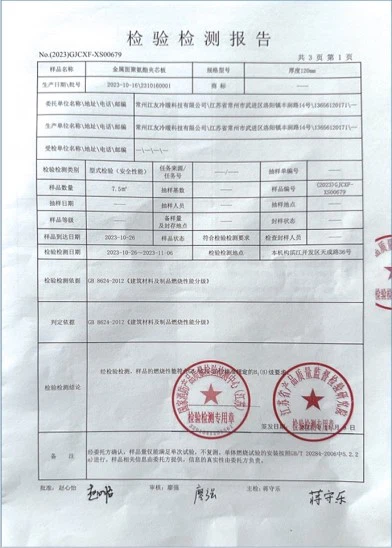
Certificate



Frequently Asked Questions
Hot Tags: logistics cold storage, China logistics cold storage manufacturers, suppliers, factory, Quick frozen Cold Storage, Emerson Compressors, cold storage hinged doors, Freezer, 304 Stainless Steel Cold Storage Insulation Board, refrigeratory


